Quick answer
- Retinol is a form of vitamin A that helps skin look smoother and more even over time.
- Beginners usually start a couple of nights a week and build up slowly, as the label directs.
- Use it at night on clean, dry skin, then moisturizer.
- Wear broad-spectrum sunscreen every morning while you use retinol.
- Use retinol and exfoliating acids (AHA or BHA) on different nights, not together.
- Pregnant, trying to conceive or breastfeeding? Check with your doctor or pharmacist first.
What does retinol do for my face?
Retinol is a form of vitamin A used in cosmetic serums and night creams. It works on how the skin's surface renews itself, which is why, with regular use, skin tends to look smoother, more even in tone and more radiant.
Retinol has a reputation as the ingredient everyone should use, but it isn't essential and it isn't instant. Any changes in how your skin looks are gradual, they vary from person to person, and they depend on using it consistently alongside moisturizer and daily sunscreen. It's also the active most likely to leave skin feeling dry or tight at first, so how you start matters more than which product you buy.
On ingredient lists you'll see it written simply as retinol. Some products use gentler related cosmetic ingredients such as retinyl palmitate or retinal; if you're unsure what a product contains, check the label.
Can I use retinol every night as a beginner?
Usually not straight away. Most people begin with a gentle, beginner-level product a couple of nights a week. If your skin feels comfortable, add another night now and then, and keep going slowly. Some people end up using it every night; others are happy with every other night. Both are fine.
Always follow the label on your product for how much to use and how often. Choosing a milder product and using it consistently tends to work better than starting strong and having to stop.
- Start with a couple of nights a week, as your label directs
- Use a plain moisturizer on the nights in between
- Add nights gradually, only while your skin feels comfortable
Should I use retinol in the morning or at night?
At night. Most retinol labels say to apply it in the evening, partly because retinol can break down in sunlight and partly because skin can feel more sun-sensitive while you use it. Keeping it in your night routine also makes it easier to pair with vitamin C in the morning.
That doesn't mean your mornings change much. Cleanse gently, apply a moisturizer and finish with broad-spectrum sunscreen every day, even when it's cloudy.
How to apply retinol step by step
A little goes a long way. Applying more doesn't make retinol work better; it mostly makes your skin feel drier.
If your skin tends to feel dry, try the sandwich method: a thin layer of moisturizer, then retinol, then another layer of moisturizer. It cushions the retinol and many beginners find it more comfortable.
- Cleanse gently and pat your face completely dry
- Take a small amount of retinol, or the amount on the label
- Dot it over forehead, cheeks and chin, then spread it in a thin layer
- Keep it away from the eye area and the corners of the nose and mouth
- Wait a moment, then apply moisturizer
- Next morning, finish your routine with broad-spectrum sunscreen
My skin feels dry and tight after retinol: what should I do?
Feeling a little dry, tight or flaky in the first weeks is common when you start retinol. It's a sign to slow down, not to push through.
If your skin stings, feels sore or the discomfort doesn't settle after you cut back, stop using the product and ask a pharmacist or doctor.
- Go back to fewer nights a week
- Use the sandwich method or a richer moisturizer
- Skip other actives, scrubs and peeling products for a while
- Choose a gentle, non-foaming cleanser
- Patch test new products on a small area first
What should I not mix with retinol, and what pairs well?
Retinol is easy to pair with calm, hydrating ingredients and best kept apart from other ingredients that work on the skin's surface.
A simple weekly pattern is an acid night, a retinol night and a plain moisturizer night in between, repeated through the week.
- Retinol + niacinamide: usually fine together
- Retinol + hyaluronic acid: a common comfort pairing
- Retinol + ceramide moisturizer: a good way to keep skin feeling comfortable
- Retinol + AHA or BHA (glycolic, lactic or salicylic acid): use on different nights
- Retinol + vitamin C: vitamin C in the morning, retinol at night
- Retinol + scrubs or peeling pads: skip them on retinol nights
Do I need sunscreen every morning when I use retinol?
Yes. Daily sunscreen is part of using retinol, not an optional extra. Choose a broad-spectrum product with SPF 30 or higher, apply a generous amount to your face, ears and neck as the last step of your morning routine, and reapply when you're outdoors for a long time, as the label directs.
Sunscreen also protects the look you're working towards: smoother, more even-looking skin is easier to keep when you wear it every day.
Can I use retinol if I'm pregnant, trying to conceive or breastfeeding?
This is a question for your doctor or pharmacist. Ask them before you start or continue using retinol or any related ingredient, and bring the product or its ingredient list with you so they can see exactly what it contains.
In DermaScanAI, Product Check shows a product's ingredients from a photo, which can make that conversation easier. The app doesn't give pregnancy advice.
In the app
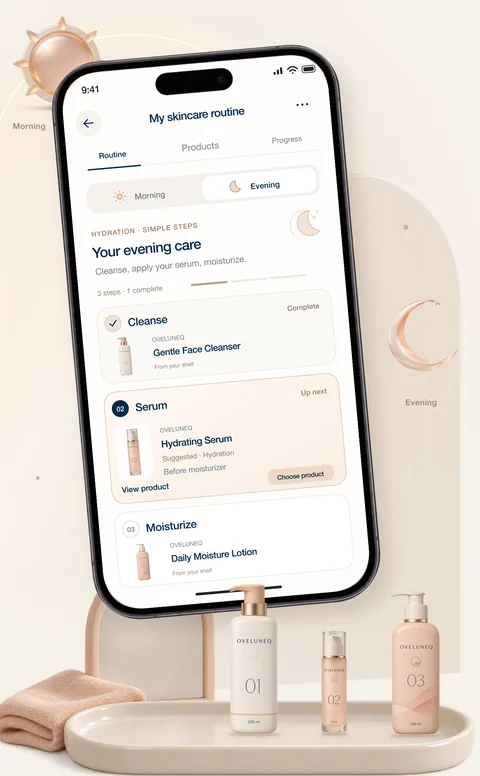
Try it in DermaScanAI: plan your retinol nights in Care Routine
Care Routine puts your products into morning and evening steps, with a reason for each one, so it's easier to keep retinol at night, sunscreen in the morning and exfoliating acids on other nights.
Not sure whether a product contains retinol or an acid? Take a photo with Product Check to see its ingredients and how to use it, then ask the AI assistant a follow-up question about where it fits.
- Check your retinol and other products with Product Check
- Save them to your Shelf
- Open Care Routine to see your morning and evening steps
- Ask the AI assistant how to space your retinol and acid nights
Questions
Frequently asked questions
What does retinol do for my face?
Retinol is a form of vitamin A that helps skin look smoother, more even and more radiant with regular use. Changes are gradual and vary from person to person. It works best as part of a simple routine with moisturizer at night and broad-spectrum sunscreen every morning.
Can I use retinol every night as a beginner?
Most beginners start with a couple of nights a week and only add more nights once their skin feels comfortable. Follow your product's label. If your skin feels dry or tight, go back to fewer nights and use more moisturizer.
Should I use retinol in the morning or at night?
At night. Most retinol labels say to apply it in the evening because retinol can break down in sunlight and skin can feel more sun-sensitive while you use it. Wear broad-spectrum sunscreen every morning.
Can I use retinol with niacinamide or hyaluronic acid?
For most people, yes. Both are gentle and often used in the same night routine as retinol. Apply the thinnest product first and finish with moisturizer. Keep exfoliating acids such as glycolic or salicylic acid for different nights.
Do I put retinol before or after moisturizer?
Usually before: cleanse, let your skin dry, apply retinol, then moisturizer. If your skin feels dry, try the sandwich method with moisturizer before and after retinol. Always check your product's directions first.
Can I use retinol if I'm pregnant?
Check with your doctor or pharmacist before using retinol or any related ingredient if you're pregnant, trying to conceive or breastfeeding. Take the product or its ingredient list with you so they can see exactly what it contains.