
Quick answer
- Niacinamide is vitamin B3: it helps skin look less shiny, more even in tone and smoother.
- It supports the moisture barrier, so skin tends to feel more comfortable and less tight.
- Apply a niacinamide serum after cleansing and before moisturizer, morning, night or both.
- Most people can use it every day; follow the product label.
- It pairs well with retinol, hyaluronic acid, vitamin C and sunscreen.
- If your skin feels tingly or warm, use it less often or with fewer layers, and stop if it stays uncomfortable.
What does niacinamide do for my face?
Niacinamide, also called nicotinamide, is a water-soluble form of vitamin B3. Cosmetic brands add it to serums, moisturizers, toners and even sunscreens because it does several useful things at once without being harsh.
In everyday terms, people reach for it to help skin look less shiny through the day, to help tone look more even and to make the surface look and feel smoother. It also supports the skin's moisture barrier, the outer layer that keeps water in, which is why skin often feels more comfortable when a niacinamide product is part of the routine.
It's worth being honest about the limits. Niacinamide is a supporting player, not a miracle ingredient. Changes in how your skin looks tend to be gradual and subtle, and they depend on the whole routine, including gentle cleansing, a moisturizer you like and daily sunscreen.
- Helps skin look less shiny and oily through the day
- Helps the look of uneven tone and dullness
- Helps the skin's surface look and feel smoother
- Supports the moisture barrier so skin feels more comfortable
Will niacinamide help my oily skin look less shiny, and what about pores?
It's one of the most popular picks for oily and combination skin. Many people find that their face looks less greasy by the afternoon once niacinamide is a regular part of their routine. Pores can also look less obvious when there's less shine around them and the surface looks smoother.
Keep expectations realistic: niacinamide doesn't change the size of your pores and it won't stop your skin making oil. Think of it as one helpful step in an oily skin routine that also includes a gentle cleanser, a lightweight moisturizer and sunscreen. If your skin feels dry rather than oily, niacinamide still fits, because it supports a comfortable-feeling barrier.
Build a morning and night routine for oily skinHow do I use a niacinamide serum?
Niacinamide is easy to slot in. The usual rule of thinnest to thickest applies: watery serums go on before creams, and sunscreen goes on last in the morning. Follow the label on your product for how much to use and how often.
- Cleanse your face with a gentle cleanser and pat it dry
- Apply a few drops of niacinamide serum, or the amount on the label
- Let it settle for a moment, then add any other serum
- Follow with your moisturizer
- In the morning, finish with broad-spectrum sunscreen
Should I use niacinamide in the morning or at night, and can I use it every day?
Both work. Niacinamide isn't an exfoliant, so it can be used in the morning under sunscreen as well as at night. Many people with oily skin like it in the morning to help with shine through the day; others prefer it at night alongside their other serums. Pick whichever routine is easiest for you to keep up.
Most niacinamide products are made for daily use, and many people use them once or twice a day. If you're new to it, starting once a day is a calm way to see how your skin feels. Consistency matters more than strength, so a product you're happy to use every day is the better choice.
Can I use niacinamide with retinol, vitamin C, hyaluronic acid or acids?
Niacinamide is one of the easiest ingredients to combine, which is a big part of its appeal.
You may have read that vitamin C and niacinamide cancel each other out. That idea comes from older tests with pure ingredients under conditions that don't reflect modern serums, and many people use both without trouble. If layering them feels like too much, use vitamin C in the morning and niacinamide at night.
- Niacinamide + retinol: usually fine together, and a common evening pairing
- Niacinamide + hyaluronic acid: a gentle, hydrating combination
- Niacinamide + vitamin C: generally fine; split morning and night if your skin disagrees
- Niacinamide + AHA or BHA: usually fine, but keep the routine short on exfoliating nights
- Niacinamide + sunscreen: an easy morning pairing
My skin feels tingly or warm after niacinamide: what should I do?
Some people notice a brief warm or tingly feeling, especially when niacinamide is layered with several other actives or used in a very concentrated product. Usually the fix is to simplify rather than push through.
If you're pregnant, breastfeeding or know your skin reacts to certain ingredients, check with your doctor or pharmacist before adding a new product.
- Patch test new products on a small area for a few days first
- Cut back to one serum and a simple moisturizer for a while
- Use the product once a day instead of twice
- Choose a gentler formula if the current one feels too strong
- Stop using it if the discomfort doesn't settle, and ask a pharmacist
How do I find niacinamide on an ingredient list?
On the INCI list on the back of the packaging, look for the word niacinamide. Ingredients are listed roughly from the highest amount to the lowest, so niacinamide near the top usually means it's a main feature of the formula, while near the bottom means a smaller supporting role.
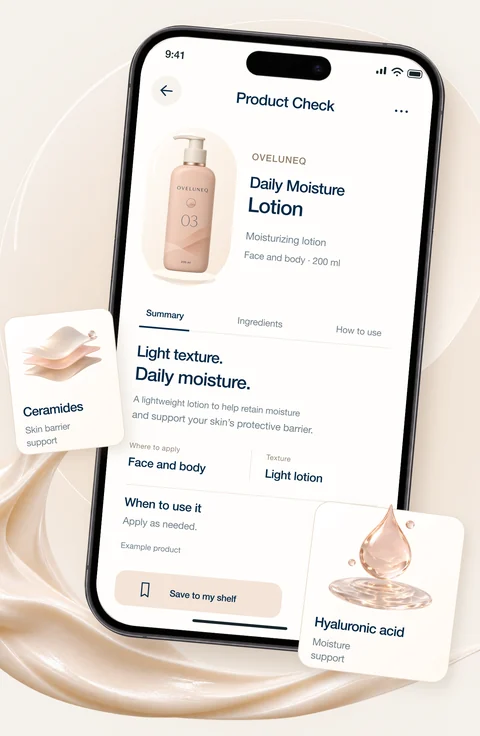
If the print is tiny or the list is long, DermaScanAI's Product Check can help: take a photo of the product and you'll see its ingredients, what each one is used for and how to use the product.
In the app
Try it in DermaScanAI: check which of your products contain niacinamide
Product Check reads a photo of a product and lists its ingredients, what they're used for and how to use it, with sources. It's a quick way to see whether your serum, moisturizer or toner already contains niacinamide before you buy another one.
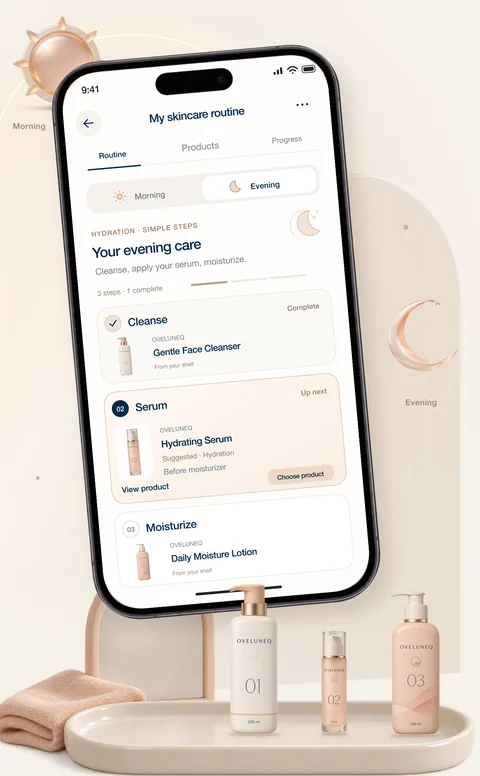
Save your products to your Shelf and use Care Routine to put them into morning and evening steps, each with a reason. If you're unsure about a pairing, ask the AI assistant a follow-up question.
- Open Product Check and photograph the product's packaging
- See whether niacinamide is in the ingredients and how to use the product
- Save it to your Shelf
- Add it to your morning or evening steps in Care Routine
Questions
Frequently asked questions
What does niacinamide do for my face?
Niacinamide is a form of vitamin B3 that helps skin look less shiny, more even and smoother, and supports the moisture barrier so your face feels more comfortable. Changes tend to be gradual and work best as part of a simple routine with gentle cleansing, moisturizer and daily sunscreen.
Can I use niacinamide every day?
Yes, most niacinamide products are made for daily use, once or twice a day. If you're new to it, start once a day and see how your skin feels. Always follow the product label, and cut back if your skin feels tingly or uncomfortable.
Should I use niacinamide in the morning or at night?
Either works. Niacinamide isn't an exfoliant, so you can wear it in the morning under sunscreen or at night with your other serums. Many people with oily skin like it in the morning to help with shine. Choose the time you'll stick to.
Can I use niacinamide with retinol?
For most people, yes. Niacinamide is gentle and often appears in the same night routine as retinol. Apply the thinner product first, then moisturizer. If layering feels like too much, use niacinamide in the morning and retinol at night.
Can I use vitamin C and niacinamide together?
Generally, yes. The idea that they cancel each other out comes from older tests that don't match how modern serums are made. If your skin feels uncomfortable when you layer them, use vitamin C in the morning and niacinamide in the evening instead.
Does niacinamide shrink pores?
It doesn't change the actual size of your pores. What many people notice is that pores look less obvious when skin looks less shiny and the surface looks smoother. Pair it with gentle cleansing and a lightweight moisturizer for the best everyday look.