
Quick answer
- Retinol + AHA/BHA: use them on alternate nights rather than layering them together.
- Vitamin C + retinol: vitamin C in the morning, retinol at night is the easy split.
- Niacinamide works alongside most ingredients, including retinol, hyaluronic acid and vitamin C.
- Hyaluronic acid is a hydrating humectant that layers with everything.
- Don't stack several exfoliating products in one routine, and introduce one new active at a time.
- Retinol and exfoliating acids make daily sunscreen even more important the next morning.
What not to mix with retinol
Retinol is the ingredient that needs the most planning. On its own it can leave skin feeling dry or tingly while you get used to it, so layering it with other strong products in the same routine tends to make that worse.
The pairing to avoid in one sitting is retinol with exfoliating acids, such as glycolic acid, lactic acid (AHAs) or salicylic acid (BHA). Both work on the skin's surface, and together they often leave skin feeling tight or uncomfortable. Use them on different nights instead, for example acid on Monday, retinol on Wednesday and a plain moisturizer night in between.
Retinol also doesn't need to sit next to vitamin C. You can use both in the same day, just at different times.
- Retinol + AHA or BHA: alternate nights
- Retinol + vitamin C: vitamin C in the morning, retinol at night
- Retinol + niacinamide: usually fine together
- Retinol + hyaluronic acid: usually fine together, and a common comfort pairing
- Retinol + scrubs: skip the scrub on retinol nights
What not to mix with vitamin C (and the niacinamide myth)
Vitamin C serums, often listed as ascorbic acid or one of its derivatives, are usually worn in the morning under sunscreen. The common advice is to keep them away from retinol and from strong exfoliating acids in the same routine, simply to keep the routine comfortable.
You may have read that niacinamide and vitamin C cancel each other out. That idea comes from older tests with pure ingredients under conditions that don't reflect how modern serums are made or used. Many people use both without any trouble. If your skin feels uncomfortable when you layer them, the simple fix is to use vitamin C in the morning and niacinamide at night.
- Vitamin C + sunscreen: a popular morning pairing
- Vitamin C + niacinamide: generally fine; split AM and PM if your skin disagrees
- Vitamin C + AHA/BHA: better on separate routines
- Vitamin C + retinol: morning and night, not layered together
What does niacinamide do for skin?
Niacinamide is a form of vitamin B3 used in serums, moisturizers and toners. In cosmetic terms, it's used to help skin look more even, less shiny and smoother, and to support a comfortable-feeling skin surface. That's why it shows up in products for oily, combination and dry skin alike.
It's one of the easiest actives to fit in. Niacinamide and hyaluronic acid are a classic pairing, and it also sits comfortably next to retinol, sunscreen and most moisturizers. So what not to mix with niacinamide? Very little. The main thing is not to pile on several serums at once, which mostly wastes product.
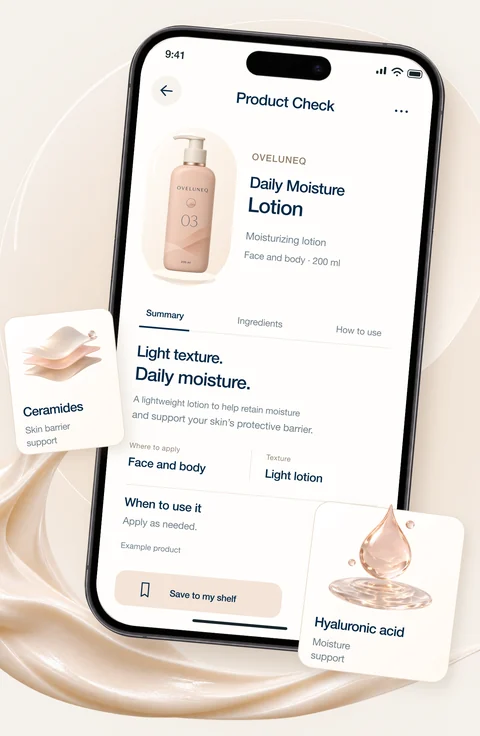
Not sure whether a serum you already own contains niacinamide or retinol? In DermaScanAI, take a photo of it with Product Check to see its ingredients, what they're used for and how to use the product.
Retinol for beginners: can I use retinol every night?
Start low and slow. Most people begin with a gentle, beginner-level retinol product a couple of nights a week and only use it more often once their skin feels comfortable with it. Follow the product label for how much to use and how often.
Apply it at night to clean, dry skin, then follow with moisturizer. If your skin feels dry, the sandwich method helps: a thin layer of moisturizer, then retinol, then more moisturizer. The next morning, wear broad-spectrum sunscreen.
- Use it at night only, on clean and dry skin
- Start with two or three nights a week, as the label directs
- Apply a small amount and keep it away from the eye area and the corners of the nose and mouth
- Follow with moisturizer, or use the sandwich method
- Wear sunscreen every morning
Vitamin C, hyaluronic acid and AHA/BHA: what they do in skincare
These are the other names you'll see most often on serum labels. Here is what each one is used for, in plain cosmetic terms.
- Vitamin C (ascorbic acid and derivatives): an antioxidant ingredient used to help skin look more radiant and even
- Hyaluronic acid and sodium hyaluronate: humectants that help skin hold water and feel plumper and more hydrated
- AHAs (glycolic, lactic, mandelic acid): exfoliating acids that help skin look smoother and more radiant
- BHA (salicylic acid): an oil-soluble exfoliant popular for oily skin and pores that look clogged
- Glycerin: a simple, widely used humectant that pairs with everything
How to add a new active to your routine
Most layering problems come from changing too much at once. If you add a retinol, an acid toner and a vitamin C serum in the same week, you won't know which one your skin likes and which one it doesn't.
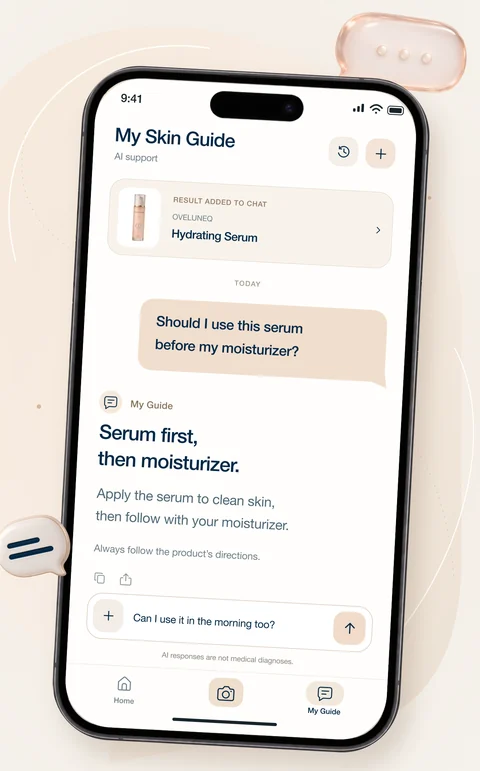
If you're unsure whether a new serum suits the rest of your routine, you can ask DermaScanAI's AI assistant a follow-up question, such as whether to use it in the morning or at night.
- Try the product on a small area for a few days first
- Add one new active at a time and give it a couple of weeks
- Keep to one exfoliating product per routine
- Apply thinnest to thickest: serums before moisturizer, sunscreen last in the morning
- If a product stings or feels uncomfortable, stop using it and ask a pharmacist
In the app
Try it in DermaScanAI: see which actives your products contain
Product Check reads a product photo and lists its ingredients, what they're used for and how to use the product, with sources. It's a quick way to see whether that new serum contains retinol, an AHA or niacinamide before you add it next to what you already use.
Save the product to your Shelf, then ask the AI assistant follow-up questions about how it fits your morning or evening routine. The app explains ingredients; it doesn't flag or check for ingredient conflicts automatically.
- Open Product Check and take a photo of your serum's packaging
- Read which ingredients it contains and how to use it
- Save it to your Shelf
- Ask the AI assistant where it fits in your routine
Questions
Frequently asked questions
Can I use vitamin C and niacinamide together?
For most people, yes. The idea that they cancel each other out comes from older tests with pure ingredients that don't match how modern serums are made. If layering them leaves your skin feeling uncomfortable, use vitamin C in the morning and niacinamide in the evening instead.
Can you use retinol and vitamin C together?
You can use both in the same day, but most people don't layer them at the same time. The simple routine is vitamin C in the morning under sunscreen and retinol at night. This keeps each routine gentler and easier on your skin.
What should you not mix with retinol?
Avoid using retinol in the same routine as exfoliating acids (AHA or BHA) or physical scrubs, because together they often leave skin feeling dry or tight. Use them on alternate nights. Retinol generally pairs well with niacinamide, hyaluronic acid and a simple moisturizer.
Can I use niacinamide with retinol?
For most people, yes. Niacinamide is a gentle ingredient that often appears alongside retinol in night products. Apply the thinner product first, or use niacinamide in the morning and retinol at night if layering feels like too much. If you're pregnant or breastfeeding, check with your doctor or pharmacist before using retinol.
How do I start using retinol as a beginner?
Choose a gentle beginner product, use it at night a couple of times a week and follow the label. Apply it to clean, dry skin, follow with moisturizer and wear sunscreen the next morning. If you're pregnant or breastfeeding, check with a doctor or pharmacist first.
Can I use salicylic acid or glycolic acid with retinol?
Not in the same routine. Salicylic acid (a BHA) and glycolic acid (an AHA) both work on the skin's surface, and combining them with retinol often makes skin feel tight or uncomfortable. Alternate them instead, for example an acid one night, retinol another night and a simple moisturizer night in between.