Quick answer
- Wash with lukewarm water and a creamy, non-foaming cleanser.
- Apply moisturizer within a few minutes of washing, while skin is still a little damp.
- Use a richer cream at night; a face oil can go on top if you like the feel.
- Wear broad-spectrum sunscreen every morning, even in winter.
- Dry skin lacks oil; dehydrated-feeling skin lacks water and can be shiny and tight at once.
- Go easy on exfoliants and avoid long, hot showers.
Dry vs dehydrated skin: how to tell by look and feel
The two get mixed up all the time. Dry skin is a skin type: it makes less oil, so it tends to feel tight, look dull and sometimes flaky, and it rarely gets shiny. Dehydrated-feeling skin describes a temporary state: skin is short on water, often after harsh cleansing, dry indoor air or too much exfoliating. Any skin type can feel dehydrated, including oily skin.
So is your skin dry or dehydrated? A quick check: if your face feels tight but still turns shiny by midday, it's probably oily or combination skin that feels dehydrated. If it feels tight and looks matte or flaky all day, it's more likely dry.
- Dry: tight most of the time, little shine, can look dull or flaky
- Dehydrated-feeling: tight after washing but shiny later, fine lines look more visible
- Both: feel more comfortable with gentle cleansing and a good moisturizer
What does skin barrier mean in skincare?
In skincare, the skin barrier is the outermost layer of your skin, often compared to a brick wall: skin cells are the bricks and natural fats like ceramides are the mortar. Its job, in everyday terms, is to help hold moisture in.
When people say their barrier feels off, they usually mean their skin feels tight, rough or stings with products it used to tolerate. The cosmetic answer is to simplify: fewer actives, gentle cleansing and moisturizers with ingredients that help skin hold moisture and feel comfortable.
Morning routine for dry skin
Mornings should be quick and comforting. If your skin feels tight after cleansing, a splash of lukewarm water is enough in the morning; save the cleanser for the evening.
- Rinse with lukewarm water, or use a creamy, non-foaming cleanser
- While skin is still slightly damp, apply a hydrating serum (optional), such as hyaluronic acid or glycerin
- Follow with a moisturizer that feels nourishing, such as a cream or rich lotion
- Finish with broad-spectrum SPF 30 or higher; a moisturizing formula can feel more comfortable
Night routine for dry skin (and should you use a face oil?)
Evenings are when dry skin gets the extra moisture. Take off sunscreen and make-up with a cleansing balm, oil or milk, which feel gentler than foaming washes, then apply a richer cream than you use in the morning.
Face oils are optional. Oils such as squalane help soften skin and reduce the feeling of tightness, but they don't add water on their own. If you like them, press a few drops over your moisturizer as the last step. If you don't enjoy the feel, a rich cream does the job.
- Take off sunscreen and make-up with a cleansing balm, oil or milk
- Apply a hydrating serum to slightly damp skin (optional)
- Use a richer night cream
- Optional: press a few drops of face oil on top
Ingredients people with dry skin often look for
Moisturizers usually combine three kinds of ingredients: humectants that draw in water, emollients that soften, and occlusives that help seal moisture in. A good dry skin moisturizer often has a little of each.
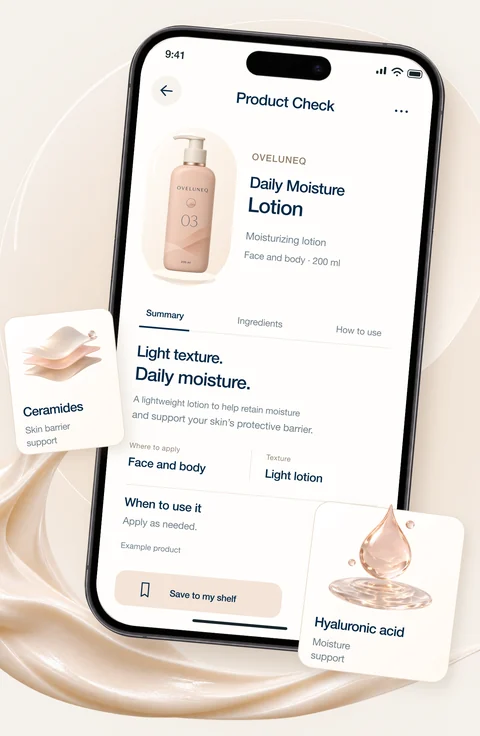
Before you buy, you can photograph a moisturizer in DermaScanAI's Product Check to see what its ingredients are used for and whether it contains fragrance.
- Humectants: glycerin, hyaluronic acid, sodium hyaluronate, urea
- Emollients: squalane, ceramides, fatty alcohols like cetearyl alcohol
- Occlusives: shea butter, petrolatum, dimethicone
- Fragrance-free formulas are often more comfortable for dry, sensitive-feeling skin
Dry skin routine in winter
Cold wind outside and heated air inside make winter the hardest season for dry skin. You don't need a whole new routine, just a few adjustments.
- Keep showers short and lukewarm rather than long and hot
- Switch to a richer cream, especially at night
- Run a humidifier in your bedroom if indoor air feels dry
- Cover your face with a scarf in cold wind
- Keep wearing sunscreen; winter sun and snow glare still count
- Use a lip balm and hand cream throughout the day
Why is my skin so dry even when I moisturize?
If your skin feels dry no matter what you do, small routine habits are often the reason rather than a lack of products. These are worth checking first.
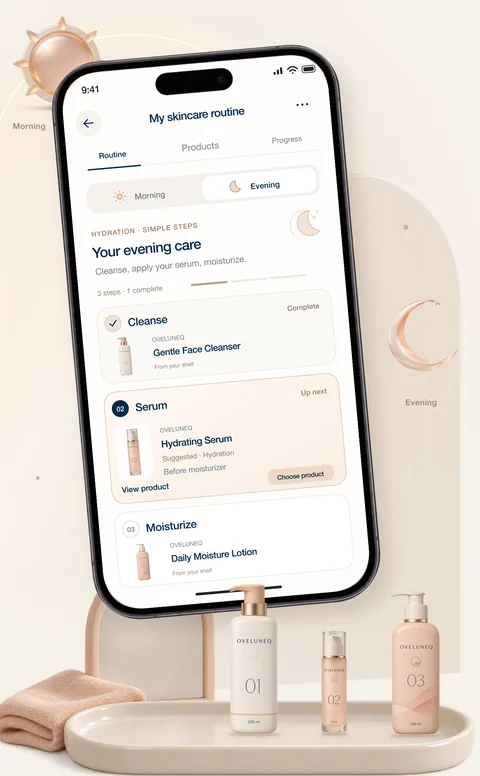
If you're unsure where a product belongs, DermaScanAI's Care Routine puts your steps in order and explains each one.
- Foaming cleansers that leave your face squeaky and tight
- Over-exfoliating or stacking several active serums
- Applying moisturizer to completely dry skin long after washing
- Hot water and rough towels; pat dry instead
- Changing several products at once
In the app
Try it in DermaScanAI: build a routine for your dry skin
In Skin Check you select dry as your skin type yourself, then take a photo to get a cosmetic overview of how your skin looks, with care tips. The app doesn't decide your skin type or measure dryness.
Care Routine then builds your morning and evening steps in order, with a reason for each one. Product Check shows whether your moisturizer contains humectants, emollients or fragrance before you add it.
- Open Skin Check and select dry as your skin type
- Open Care Routine to see your AM and PM steps in order
- Check your moisturizer's ingredients with Product Check
Questions
Frequently asked questions
What is the difference between dry and dehydrated skin?
Dry skin is a skin type that makes less oil, so it feels tight and looks matte or flaky most of the time. Dehydrated-feeling skin is short on water and can happen to any type, including oily skin, often after harsh cleansing or in dry air. It can feel tight and still look shiny.
My face is so dry and flaky, what can I do?
Simplify first. Swap a foaming wash for a creamy cleanser, rinse with lukewarm water and apply a hydrating serum and moisturizer to slightly damp skin, then sunscreen in the morning. Use a richer cream at night and skip scrubs while your skin feels flaky. If it stays uncomfortable, ask a pharmacist or doctor for advice.
What does skin barrier mean in skincare?
It's the outermost layer of your skin, made of skin cells held together by natural fats like ceramides. In everyday terms, it helps hold moisture in. When skin feels tight or stings with products, simplifying your routine and using a comforting moisturizer usually helps it feel better.
Should I use a face oil if my skin is dry?
You can, but it's optional. Face oils soften skin and help reduce the tight feeling, but they don't add water. Use them as the last step at night, pressed over your moisturizer. If you dislike the feel, a rich cream works just as well.
Why does my skin feel tight after cleansing?
A tight feeling right after washing usually means the cleanser or the routine strips more than your skin likes, for example a strong foaming wash, hot water or washing several times a day. Switch to a creamy or gel cleanser, keep the water lukewarm and apply moisturizer within a few minutes while your skin is still slightly damp.
How do I care for dry skin in winter?
Switch to a richer cream, especially at night, keep showers short and lukewarm, and use a humidifier if heated air feels dry. Protect your face from cold wind with a scarf and keep wearing sunscreen, since winter sun and snow glare still reach your skin.