Quick answer
- Hyaluronic acid is a humectant that helps skin hold water, so it feels hydrated and looks plumper.
- On labels it often appears as sodium hyaluronate or hydrolyzed hyaluronic acid.
- Apply it to slightly damp skin after cleansing, then follow with moisturizer.
- Use it morning, night or both; it's made for everyday use.
- It pairs well with retinol, niacinamide, vitamin C and exfoliating acids.
- It doesn't replace moisturizer: without one on top, skin can still feel tight.
What does hyaluronic acid do for my face?
Hyaluronic acid is one of the best-known hydrating ingredients in skincare. Despite the word acid, it doesn't exfoliate. It's a humectant, which means it attracts water and helps the top layers of the skin hold on to it.
The result is skin that feels more hydrated, looks plumper and smoother, and has a fresher, more bouncy look. Fine dry lines can look softer when skin is well hydrated. That effect is about hydration, though: it lasts as long as the skin stays moisturized, so it works best as a daily habit.
On ingredient lists you'll often see sodium hyaluronate, hydrolyzed hyaluronic acid or sodium acetylated hyaluronate. These are related forms with different sizes, and many serums combine more than one for a light, layered feel. Glycerin is another common humectant that does a similar job.
- Helps skin hold water so it feels more hydrated
- Helps skin look plumper, smoother and fresher
- Gentle and suitable for oily, dry, combination and sensitive-feeling skin
- Layers easily under moisturizer and sunscreen
How do I use a hyaluronic acid serum? Wet or dry skin?
Damp skin is the usual advice. Because hyaluronic acid draws in water, giving it some water to work with right after cleansing or after a hydrating mist helps it do its job. Then a moisturizer on top helps keep that hydration in.
- Cleanse gently and leave your skin slightly damp, or mist it with water
- Press a few drops of serum into your face and neck, or the amount on the label
- Apply any other serum you use
- Follow straight away with moisturizer
- In the morning, finish with broad-spectrum sunscreen
Should I use hyaluronic acid in the morning or at night?
Both, if you like. Hyaluronic acid isn't sun-sensitive and doesn't exfoliate, so it fits into any routine. In the morning it gives a hydrated base under moisturizer and sunscreen, which many people like before make-up. At night it pairs well with stronger actives and helps the routine feel more comfortable.
If you only want to use it once a day, choose the time when your skin feels driest. For many people that's the evening, or the morning after a night in a heated or air-conditioned room.
Can I use hyaluronic acid every day, and with retinol, niacinamide or vitamin C?
Yes, it's made for daily use, and it's one of the easiest ingredients to combine. Because it's gentle and hydrating, it often makes routines with stronger actives feel more comfortable.
When layering, go from thinnest to thickest texture. A watery vitamin C or hyaluronic acid serum usually goes first, a thicker serum next, then moisturizer.
- Hyaluronic acid + retinol: a popular night pairing that helps skin feel less dry
- Hyaluronic acid + niacinamide: a gentle, everyday combination
- Hyaluronic acid + vitamin C: vitamin C serum first, then hyaluronic acid, then moisturizer and sunscreen
- Hyaluronic acid + AHA or BHA: fine, and helpful on exfoliating nights
- Hyaluronic acid + ceramides: a comfortable pairing for dry-feeling skin
Why does my skin feel tight after hyaluronic acid?
This usually comes down to how it's used rather than the ingredient itself. Humectants pull in water from wherever they can. In very dry air, with nothing on top, some of that water can escape again, and skin may feel tight or a bit sticky.
If your skin still feels uncomfortable, try a different formula, patch test new products on a small area first and stop using anything that stings. If you're pregnant, breastfeeding or have known sensitivities, check with your doctor or pharmacist before adding a new product.
- Apply it to damp skin, not bone-dry skin
- Always follow with a moisturizer to help keep hydration in
- Use a richer cream in cold, dry or heated rooms
- Use a few drops; a thick layer can feel tacky
- Check the rest of your routine for harsh cleansers or too many exfoliants
Is hyaluronic acid good for oily skin too? Choosing a texture
Yes. Oily skin can still feel dehydrated, especially if you use foaming cleansers or exfoliating acids. Hyaluronic acid adds water rather than oil, so it suits oily and combination skin well. A light serum or gel moisturizer with hyaluronic acid is often enough.
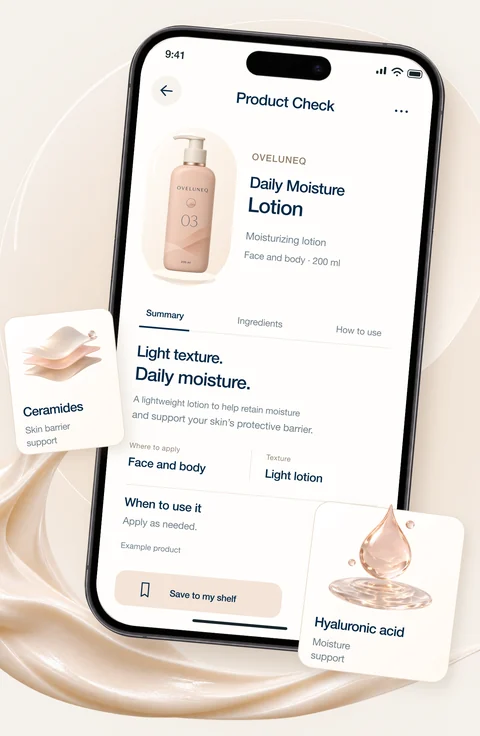
Dry skin usually likes hyaluronic acid under a richer cream with ingredients such as ceramides or shea butter. If you want to know whether a moisturizer you already own contains hyaluronic acid, Product Check in DermaScanAI shows a product's ingredients and how to use it from a single photo.
- Oily skin: watery serum or gel moisturizer
- Combination skin: serum everywhere, lighter lotion on the T-zone
- Dry skin: serum on damp skin, then a richer cream
In the app
Try it in DermaScanAI: check which products contain hyaluronic acid
Product Check reads a photo of a product and lists its ingredients, what they're used for and how to use it, with sources. It helps you spot sodium hyaluronate and other humectants in serums and moisturizers you already own.
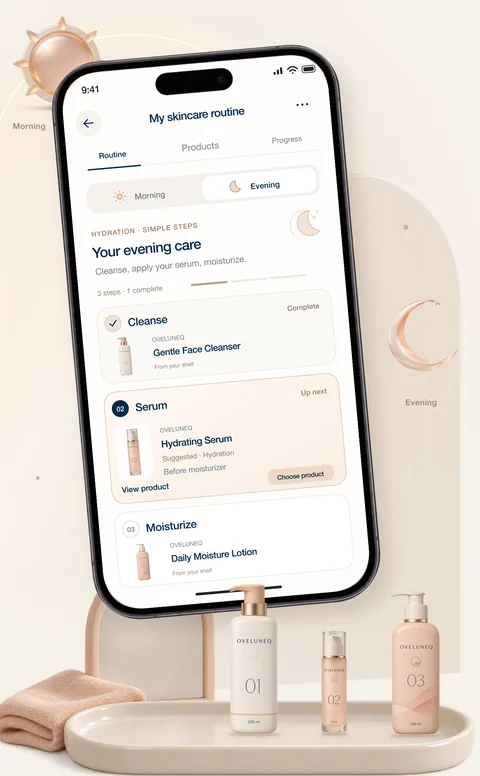
Save your products to your Shelf and use Care Routine to place your hydrating serum between cleanser and moisturizer. You can also ask the AI assistant how to layer it with retinol or vitamin C.
- Open Product Check and photograph the product's packaging
- Look for hyaluronic acid or sodium hyaluronate in the ingredients
- Save it to your Shelf
- Add it to your morning or evening steps in Care Routine
Questions
Frequently asked questions
What does hyaluronic acid do for my face?
Hyaluronic acid is a humectant that helps skin attract and hold water, so it feels more hydrated and looks plumper and smoother. It doesn't exfoliate. The effect is about hydration, so it works best used daily under a moisturizer.
Do I put hyaluronic acid on wet or dry skin?
Slightly damp skin is best. Apply it right after cleansing or after a light mist of water, then follow straight away with moisturizer to help keep that hydration in. On very dry skin in dry air, it can leave your face feeling tight.
Can I use hyaluronic acid every day?
Yes. Hyaluronic acid is gentle and made for daily use, morning, night or both. Follow your product's label for how much to use. If your skin ever feels tacky or tight, use fewer drops and make sure you apply moisturizer on top.
Can I use hyaluronic acid with retinol or vitamin C?
Yes, for most people. With retinol at night, hyaluronic acid helps the routine feel more comfortable. In the morning, apply vitamin C first, then hyaluronic acid, moisturizer and sunscreen. Layer thinnest to thickest.
Do I still need moisturizer if I use hyaluronic acid?
Yes. Hyaluronic acid adds hydration, but it doesn't seal it in. A moisturizer on top helps hold that water in your skin, which is why using the serum on its own can sometimes leave skin feeling tight.
What is sodium hyaluronate?
Sodium hyaluronate is a salt form of hyaluronic acid and one of the most common names you'll see on ingredient lists. It does the same hydrating job, helping skin hold water so it feels more comfortable and looks plumper.