
Quick answer
- Morning: gentle gel or foaming cleanser, lightweight serum (optional), oil-free moisturizer, then sunscreen last.
- Night: remove sunscreen and make-up, cleanse, then apply a light moisturizer.
- Yes, oily skin still needs moisturizer: pick a gel or light lotion labelled oil-free or non-comedogenic.
- Exfoliate gently a few times a week at most, as the label directs, rather than every day.
- Combination skin: keep the same steps, but use lighter layers on your T-zone and a little more moisture on your cheeks.
- Skip harsh habits: over-washing, alcohol-heavy toners and scrubbing tend to make skin feel tight without making it look less shiny.
How do I know if my skin is oily or combination?
Oily skin tends to look shiny across the whole face within an hour or two of washing. Make-up can slide off by midday, and pores on the nose, forehead and cheeks may look more visible. Combination skin shows the same shine, but mainly on the T-zone (forehead, nose and chin), while the cheeks feel normal or even a little dry.
A quick way to check is the bare-face test: wash with a gentle cleanser, leave your skin bare for about 30 minutes, then press a clean tissue on each area. Oil on every spot points to oily skin; oil only on the T-zone points to combination skin.
- Shine all over your face soon after washing: likely oily
- Shiny T-zone with comfortable or dry cheeks: likely combination
- Make-up that wears off or looks greasy by lunchtime
- Pores that look more visible on the nose and forehead
Morning skincare routine for oily skin
A good morning routine for oily skin is short and light. The goal is a fresh, comfortable face that holds up under sunscreen and make-up, not a squeaky-clean feeling. Four steps are plenty, and only three of them are essential.
The same steps work for anyone, whatever your age or gender. Searches for an oily skin routine for men, women or teenagers all lead back to the same basics: wash gently, moisturize lightly and wear sunscreen every day.
- Cleanser: a mild gel or foaming face wash with lukewarm water, then pat dry
- Serum (optional): one lightweight, water-based serum, such as a niacinamide serum
- Moisturizer: an oil-free gel or light lotion, applied in a thin layer
- Sunscreen: broad-spectrum SPF 30 or higher with a matte or gel finish, as your last skincare step
Night routine for oily skin (and how often to exfoliate)
At night, your main job is to take off the day: sunscreen, make-up and the oil that builds up by evening. If you wore make-up or water-resistant sunscreen, a double cleanse works well. Start with micellar water or a cleansing balm, then use your usual gentle cleanser. Finish with a light moisturizer so your skin doesn't feel stripped overnight.
Exfoliating products are often popular with people who have oily skin because they leave the surface feeling smoother. A leave-on BHA (salicylic acid) toner or serum is a common choice. Start with once or twice a week, follow the label and keep it to one exfoliating product at a time rather than stacking several. Using one every night, or alongside a scrub and a retinol, often leaves skin feeling tight and uncomfortable.
- Remove make-up and sunscreen with micellar water or a cleansing balm
- Cleanse with a gentle gel or foaming wash
- Exfoliating toner or serum on exfoliation nights only
- Finish with a light, oil-free moisturizer
Skincare routine for combination skin (AM and PM)
A combination skin routine uses the same order as the oily skin routine. The difference is how much you apply and where. Think of your face as two zones: a shinier T-zone and calmer cheeks.
In the morning, cleanse gently, use a light gel moisturizer on the T-zone and a little more, or a slightly richer lotion, on your cheeks, then apply sunscreen everywhere. At night, cleanse, use an exfoliating product only on the oilier areas on the nights you exfoliate, and moisturize your whole face, again with a bit more on the cheeks.
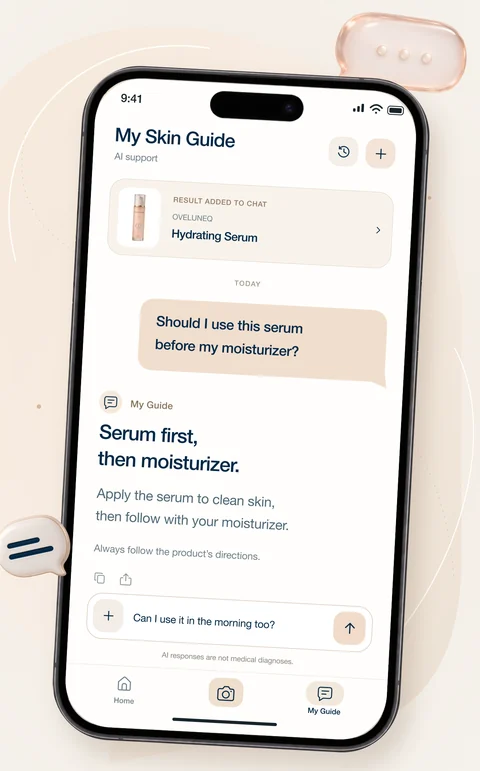
Not sure which of your products should go on which zone? In DermaScanAI you can ask the AI assistant follow-up questions about your routine, such as whether a serum suits your T-zone or where a product fits in your steps.
- AM: gentle cleanser, light moisturizer (more on the cheeks), sunscreen everywhere
- PM: remove sunscreen, cleanse, exfoliate the T-zone only on exfoliation nights, moisturize
- Clay masks: apply just to the forehead, nose and chin if your cheeks feel dry
- Use one sunscreen for the whole face; just choose a texture that feels light on your T-zone
Which ingredients and textures suit oily skin?
Texture often matters as much as ingredients. Gels, gel-creams, fluids and light lotions tend to feel more comfortable on oily skin than rich creams, balms and face oils. Labels such as oil-free and non-comedogenic are worth looking for on moisturizers, sunscreen and make-up.
These ingredients often show up in products made for oily and combination skin. Each one has a cosmetic purpose, and you don't need all of them. Start with one, see how your skin feels, then decide whether to add another.
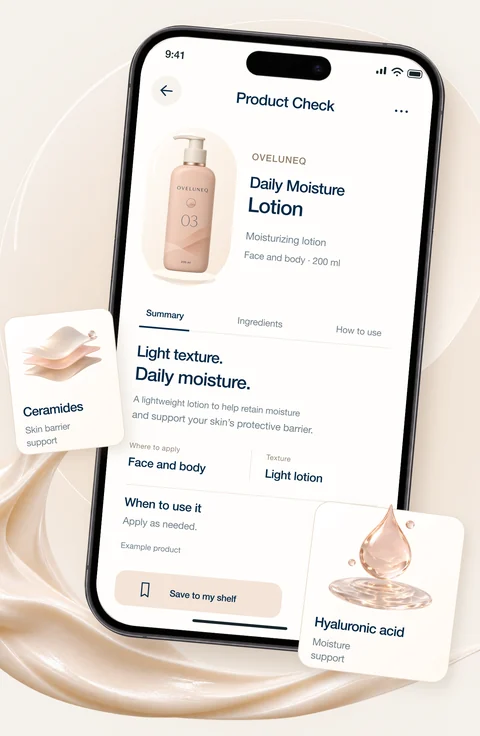
Before you buy, you can take a photo of the product in DermaScanAI's Product Check to see what its ingredients are used for and how to use it, which helps you spot heavy oils or alcohol-heavy formulas.
- Niacinamide: a common serum ingredient in products for a more balanced, less shiny look
- Salicylic acid (BHA): a cosmetic exfoliant used in toners, serums and cleansers
- Clay (kaolin, bentonite): used in masks to absorb surface oil
- Glycerin and hyaluronic acid: humectants that add lightweight moisture without heaviness
- Zinc oxide or titanium dioxide: mineral sunscreen filters, often in matte-finish formulas
My skin is oily and dry at the same time: why?
Skin that looks shiny but feels tight or rough is very common, and it often comes down to the routine rather than your skin type. Washing too often, using hot water, harsh foaming washes, alcohol-heavy toners or several exfoliating products can leave skin feeling stripped, while the surface still looks shiny a few hours later. This is often described as oily but dehydrated-feeling skin.
The fix in cosmetic terms is to be gentler, not stronger: cleanse twice a day at most, use lukewarm water, take a break from exfoliating for a while and add a lightweight moisturizer with humectants like glycerin or hyaluronic acid. Many people find their skin feels more comfortable once they stop over-cleansing.
Oily skin in summer: tips for hot and humid weather
Heat and humidity make most faces look shinier, so it helps to lighten your routine for summer or a humid climate rather than piling on more products. Swap to fewer, thinner layers and keep a couple of quick fixes on hand for the middle of the day.
- Use blotting papers: press them gently on shiny areas instead of rubbing
- Rinse your face with water or a gentle wash after sweating
- Switch to a gel moisturizer, or let a moisturizer with SPF cover both steps
- Choose a matte or gel sunscreen and reapply it when you're outdoors, as the label directs
- Keep make-up light and look for oil-free formulas
My face is so oily all the time: mistakes to avoid
When oily skin feels hard to manage, the routine is often doing too much. These are the habits worth dropping first.
- Washing your face more than twice a day, or scrubbing hard
- Skipping moisturizer because your skin already looks shiny
- Using alcohol-heavy toners for that tingly, squeaky-clean feeling
- Stacking several exfoliating products or using one every night
- Trying harsh DIY hacks on your face, such as lemon juice, toothpaste or baking soda
- Changing several products at once, so you can't tell what suits your skin
In the app
Try it in DermaScanAI: build a routine for your oily or combination skin
In Skin Check, you choose your skin type yourself, such as oily or combination, then take a photo to get a cosmetic overview of how your skin looks. The app doesn't decide your skin type for you.
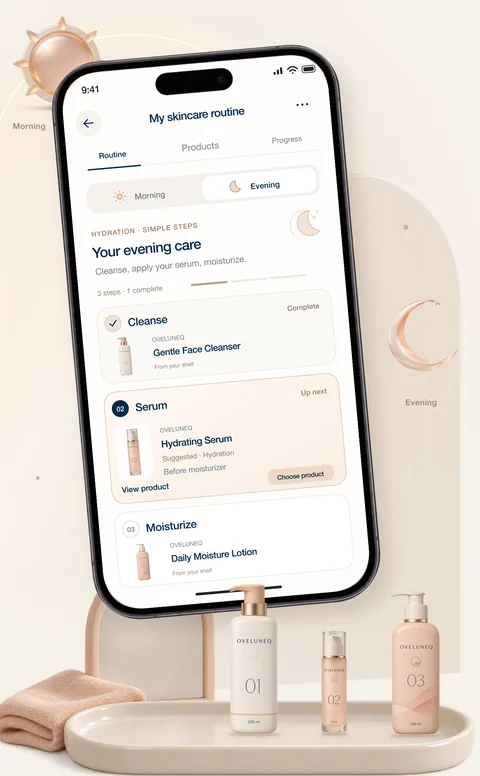
From there, Care Routine builds a morning and evening plan with the order of each step and a short reason for it. Product Check lets you look up a moisturizer or sunscreen you're considering, so you can see its ingredients and how to use it before it goes into your routine.
- Open Skin Check and select oily or combination as your skin type
- Open Care Routine to get your morning and evening steps in order
- Use Product Check on a moisturizer or sunscreen to see its ingredients and how to use it
Questions
Frequently asked questions
Does oily skin still need moisturizer?
Yes. Oily skin can still feel tight or dehydrated, especially after cleansing or exfoliating. Skipping moisturizer often leaves skin feeling stripped without making it look any less shiny. Choose a lightweight gel or lotion labelled oil-free or non-comedogenic and apply a thin layer morning and night.
My face is so oily, what can I do?
Go gentler rather than stronger. Cleanse morning and night with a mild gel cleanser, use a lightweight oil-free moisturizer and finish the morning with a matte-finish SPF 30 or higher. Add one leave-on exfoliant once or twice a week, blot during the day instead of washing again, and give the routine a few weeks before changing it.
How do I care for combination skin?
Use the same routine as for oily skin, but adjust it by zone. Apply lighter layers on your forehead, nose and chin, and a little more moisturizer on your cheeks. Use exfoliating products and clay masks only on the oilier areas, and apply sunscreen evenly over your whole face every morning.
How often should I exfoliate oily skin?
Start with once or twice a week and follow the product label. Some people with oily skin use a gentle leave-on exfoliant more often, but daily use or combining several exfoliating products often leaves skin feeling tight. Use one exfoliating product at a time and skip a night if your skin feels uncomfortable.
Why is my face so oily when I wake up?
Skin keeps making oil overnight, and a warm bedroom, a heavy night cream or a pillowcase that rubs product around can make your face look shinier by morning. Try a lighter moisturizer at night, change pillowcases often and start the day with a gentle cleanse. Some morning shine is very common and doesn't mean your routine isn't working.
Which sunscreen texture suits oily skin?
Many people with oily skin prefer gel, fluid or matte-finish sunscreens labelled oil-free or non-comedogenic. Mineral formulas with zinc oxide or titanium dioxide are a common choice. Pick broad-spectrum SPF 30 or higher, apply it as the last skincare step in the morning and reapply when you're outdoors.