
Quick answer
- Vitamin C is an antioxidant ingredient that helps skin look more radiant and even-toned.
- Morning is the usual choice: apply it after cleansing, then moisturizer and sunscreen.
- It pairs well with sunscreen, hyaluronic acid and, for most people, niacinamide.
- Keep retinol and strong exfoliating acids for your evening routine instead.
- Results are gradual and depend on daily sunscreen; no serum works overnight.
- Store it closed, cool and away from light; a serum that has turned dark orange or brown is past its best.
What does vitamin C serum do for my face?
Vitamin C is one of the best-known antioxidant ingredients in skincare. In a serum, it's used to help skin look more radiant, to help the look of uneven tone and dullness, and to complement your sunscreen as part of a daily morning routine.
It's worth being realistic about what it can do. A vitamin C serum won't change your natural skin tone, and it doesn't replace sunscreen. Think of it as a supporting step: used consistently for several weeks, many people find their skin looks fresher and more even. How much you notice depends on the formula, your skin and how regularly you protect it from the sun.
- Helps skin look more radiant and less dull
- Supports a more even-looking tone as part of a routine
- Works alongside sunscreen as a morning antioxidant step
- Layers easily under moisturizer
Should I use vitamin C serum in the morning or at night?
Most people use vitamin C in the morning. As an antioxidant, it fits naturally into the part of the day when your skin is out in daylight, and it sits comfortably under moisturizer and sunscreen.
That said, there's no strict rule. Some people prefer it at night, especially if their morning routine already feels crowded or the serum feels slightly sticky under make-up. The one thing to avoid is layering it with retinol or exfoliating acids in the same routine. If you use those at night, keep vitamin C for the morning and the split takes care of itself.
How to use vitamin C serum on your face, step by step
A few drops are usually enough for the whole face. Follow the amount and frequency on your product's label, and give a new serum a small patch test first, for example along the jawline for a few days.
- Cleanse your face and pat it dry
- Apply a few drops of vitamin C serum and press it in across your face and neck
- Let it settle for a minute
- Follow with a hydrating serum if you use one, then moisturizer
- Finish with a broad-spectrum sunscreen in the morning
Can I use vitamin C with niacinamide, hyaluronic acid or retinol?
Vitamin C plays well with most of the ingredients you probably already own. The pairings people ask about most are below.
The old warning that vitamin C and niacinamide cancel each other out comes from tests with pure ingredients that don't reflect how modern serums are made. Many people layer them without trouble. If your skin feels uncomfortable when you do, use vitamin C in the morning and niacinamide in the evening.
- Vitamin C + hyaluronic acid: an easy pairing; apply the thinner texture first
- Vitamin C + niacinamide: generally fine; split morning and night if your skin disagrees
- Vitamin C + retinol: vitamin C in the morning, retinol at night
- Vitamin C + glycolic or salicylic acid: better in separate routines
- Vitamin C + sunscreen: the classic morning combination
Is vitamin C serum good for dark spots?
Vitamin C is a popular choice in routines aimed at the look of dark spots and uneven tone. It can help skin look more even over time, but it won't make spots disappear, and changes are gradual rather than dramatic.
The step that matters most for the look of dark spots is daily broad-spectrum sunscreen. Without it, sunlight keeps making spots look more noticeable, and no serum can keep up. If anything about your skin worries you, ask a doctor or pharmacist rather than relying on skincare.
Which vitamin C is on the label, and how should I store it?
Vitamin C appears under several names. Ascorbic acid is the original form and tends to be the most sensitive to air and light. Derivatives such as sodium ascorbyl phosphate, magnesium ascorbyl phosphate, ascorbyl glucoside, 3-O-ethyl ascorbic acid and tetrahexyldecyl ascorbate are often chosen because they're more stable or feel gentler.
Vitamin C serums can darken as they oxidize. A pale yellow tint is often normal, but if yours has turned dark orange or brown, it's past its best and worth replacing. Keep the cap tightly closed, store it away from heat and light, and use it within the period printed on the pack.
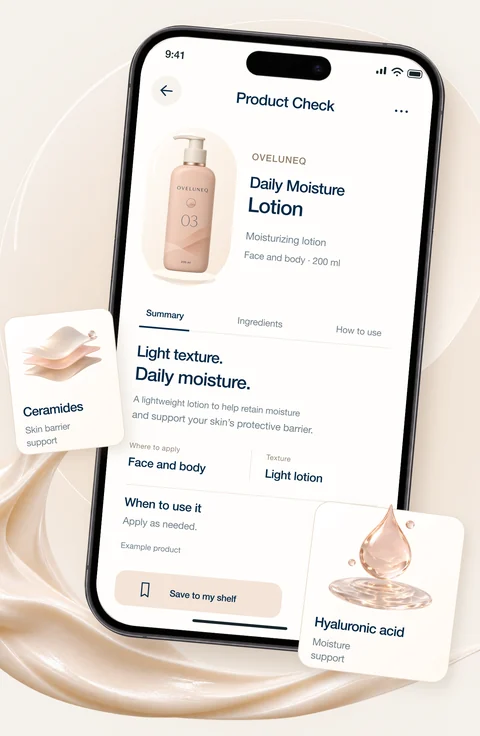
Not sure which form your serum contains? A photo in DermaScanAI's Product Check shows the ingredient list, what each ingredient is used for and how to use the product.
Vitamin C serum for sensitive-feeling skin: start gently
Some vitamin C serums, especially those with ascorbic acid at a low pH, can tingle on application. If your skin tends to react to new products, choose a gentler derivative, start every other morning and build up slowly.
Patch test first, apply to fully dry skin and skip it on days your skin feels irritated. If a product keeps stinging or your skin feels uncomfortable, stop using it and ask a pharmacist. If you're pregnant or breastfeeding, check with your doctor or pharmacist before adding a new active.
In the app
Try it in DermaScanAI: check your vitamin C serum and place it in your routine
Product Check reads a photo of your serum and lists its ingredients, what they're used for and how to use the product, with sources. It's a quick way to see which form of vitamin C you have and what else is in the formula.
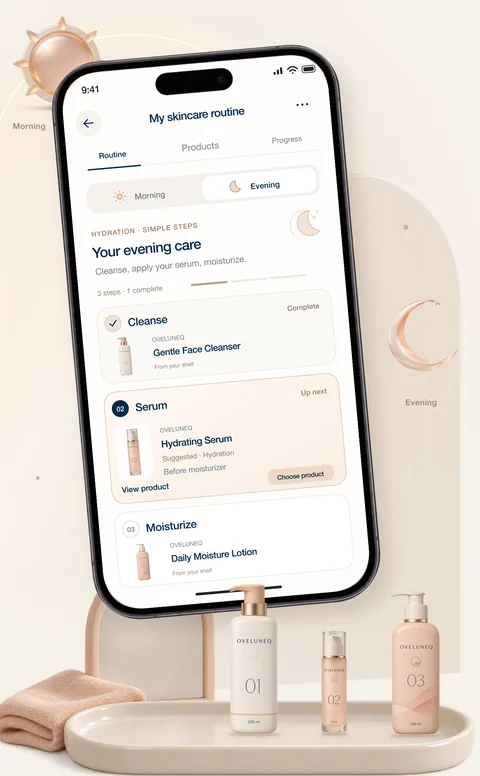
Then add it to your Care Routine, which lays out your morning and evening steps in order with a reason for each step, and ask the AI assistant if you're unsure whether it belongs in the morning or at night.
- Open Product Check and take a photo of your serum
- Read its ingredients and how to use it
- Add it to your morning Care Routine before moisturizer and sunscreen
- Ask the AI assistant any follow-up questions
Questions
Frequently asked questions
What does vitamin C serum do for my face?
Vitamin C is an antioxidant ingredient used to help skin look more radiant and even-toned. Used daily alongside sunscreen, it can help skin look fresher over several weeks. It won't change your natural skin tone, and it works as a supporting step rather than a quick fix.
Can I use vitamin C in the morning and retinol at night?
Yes, that's the most common way to use both. Apply vitamin C in the morning under moisturizer and sunscreen, and retinol in the evening on clean, dry skin. Keeping them in separate routines makes each one feel gentler. If you're pregnant or breastfeeding, check with your doctor or pharmacist before using retinol.
Can I use vitamin C and niacinamide together?
For most people, yes. The idea that they cancel each other out is based on older tests with pure ingredients, not modern serums. Apply the thinner product first. If layering them makes your skin feel uncomfortable, use vitamin C in the morning and niacinamide at night.
My vitamin C serum turned orange: can I still use it?
A slight yellow tint is often normal, but a serum that has turned dark orange or brown has oxidized and is past its best. It's unlikely to do much for your skin and may leave a faint tint. Replace it, and keep the next bottle tightly closed, cool and away from light.
Is vitamin C serum worth it for my skin?
It can be a nice addition if you'd like skin that looks more radiant and even, and you already wear sunscreen daily. If your budget only covers one product, a sunscreen you enjoy wearing every morning matters more. Add vitamin C once the basics of cleanser, moisturizer and sunscreen are in place.
Does vitamin C serum go before or after moisturizer?
Before. Apply vitamin C to clean, dry skin, let it settle for a minute, then follow with any hydrating serum, your moisturizer and, in the morning, sunscreen as the final step. A simple rule is to layer from the thinnest texture to the thickest.