
Quick answer
- Sunscreen every morning is the base habit for a more even-looking tone.
- Niacinamide, vitamin C and gentle exfoliating acids are common choices for a more even look.
- Introduce one ingredient at a time and give it weeks, not days.
- Don't pick at blemishes: picking tends to leave darker-looking marks.
- Skip products that promise to change your natural skin color, and harsh DIY hacks like lemon juice.
- Results vary from person to person; no product can promise a specific outcome.
Daily sunscreen: the base habit for a more even-looking tone
If you only change one thing, make it sunscreen. Sun exposure is one of the main reasons dark spots on the face look more noticeable over time, and any serum you use works against you if your skin gets unprotected sun every day.
Use a broad-spectrum sunscreen of SPF 30 or higher as the last step of your morning routine, every day, including cloudy days and days you sit near a window. Most people apply too little, so cover your whole face, ears and neck generously.
- Apply it as your last morning skincare step, before make-up
- Use enough to cover your face, ears and neck evenly
- Reapply when you're outdoors, as the label directs, and after sweating or swimming
- Add shade, a hat and sunglasses on sunny days
Which ingredients help skin look more even?
Several cosmetic ingredients are commonly used in products for a more even-looking complexion. You don't need all of them; one well-chosen serum used consistently is plenty to start with.
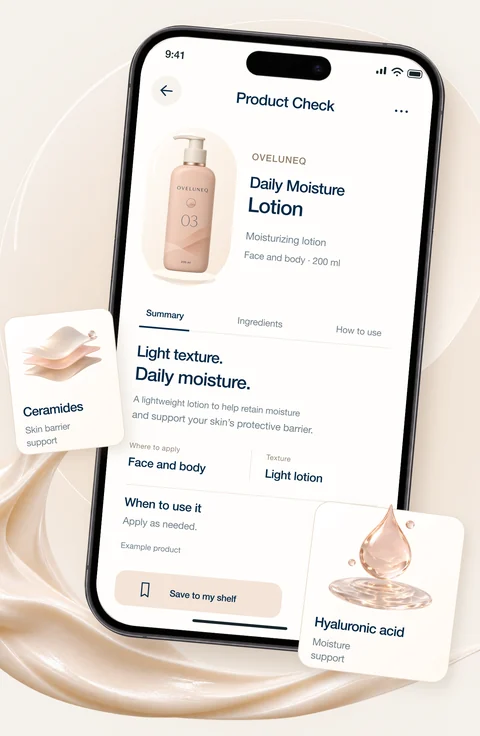
Before you buy a serum, you can take a photo of it in DermaScanAI's Product Check to see whether it contains niacinamide, vitamin C or an exfoliating acid, and how to use it.
- Niacinamide: used in serums and moisturizers to help skin look more even and smoother
- Vitamin C (ascorbic acid and derivatives): an antioxidant often worn in the morning under sunscreen
- Exfoliating acids (glycolic, lactic, mandelic): help skin look smoother and more radiant
- Retinol: an evening ingredient used for smoother-looking skin; start slowly
Caring for dark marks left after blemishes
The flat dark or reddish marks that can linger after a blemish are one of the most common reasons people search for dark spots on the face. They usually become less noticeable on their own over time, but that time varies a lot from person to person.
Cosmetic care here is mostly about not making them look worse: don't pick or squeeze, keep a gentle routine, wear sunscreen every day and be patient. A gentle, steady routine for blemish-prone skin also means fewer new marks to deal with.
A gentle AM and PM routine for acne-prone skinEven skin tone care for medium and deep skin tones
Advice written for very fair skin doesn't always fit medium, brown and Black skin. Darker skin tones tend to show marks for longer after picking, harsh scrubbing or over-exfoliating, so gentle care matters even more.
The goal is an even-looking version of your own tone, never a lighter one. Avoid products sold to change your natural skin color, and be cautious with strong at-home peels and aggressive exfoliation.
- Choose gentle exfoliation: start once or twice a week and build up slowly
- Look for sunscreen without a white cast, such as tinted mineral or sheer chemical formulas
- Keep sunscreen daily, even though deeper skin rarely burns
- Skip any product that promises to change your natural skin color
- Add one new active at a time and stop if it stings
How to even out skin tone without foundation (and with it)
Skincare works slowly, so many people like a quick make-up fix in the meantime. Without foundation, a tinted sunscreen or tinted moisturizer evens out the look of your skin in one step. A little concealer dabbed only on darker areas often looks more natural than a full layer of foundation.
If you do use foundation, apply thin layers and build coverage only where you need it. Match the shade to your neck and jawline in daylight.
My skin looks dull and uneven: habits to check first
Some habits work against an even-looking complexion. Dropping these often makes more difference than adding a new product.
To see how your skin looks over time, take photos in the same light every few weeks. In DermaScanAI, a well-lit photo in Skin Check gives you a cosmetic overview, and you can revisit your saved results later in History.
- Skipping sunscreen or applying too little
- Picking or squeezing blemishes
- Harsh scrubs and stacking several exfoliating products
- DIY hacks like lemon juice, baking soda or toothpaste
- Switching products every week before any has had time to work
In the app
Try it in DermaScanAI: build an even-tone routine around daily SPF
Product Check shows which ingredients your serum contains, what they're used for and how to use it. Care Routine then puts every product in order, with sunscreen as the last morning step, and gives a short reason for each step.
To see how your skin looks over time, take well-lit photos in Skin Check and open your saved results in History. The app gives a cosmetic overview of how skin looks; it doesn't label or measure spots.
- Check your serum's ingredients with Product Check
- Open Care Routine and keep sunscreen as your last morning step
- Take a well-lit photo in Skin Check and revisit it later in History

Questions
Frequently asked questions
My skin tone is uneven: what can I do?
Wear broad-spectrum SPF 30 or higher every morning, add one gentle ingredient such as niacinamide or vitamin C, and avoid picking at blemishes or scrubbing hard. Use your routine consistently for several weeks before judging it, and introduce new products one at a time.
Can skincare make dark spots go away?
Skincare can help dark spots look less noticeable over time, but no cosmetic product can promise to make them disappear, and how much they change varies from person to person. Daily sunscreen, a gentle ingredient like niacinamide and patience are the realistic cosmetic approach. For any concern about a spot, see a qualified professional.
Is vitamin C serum good for dark spots?
Vitamin C is a popular choice in cosmetic serums because it helps skin look brighter and more even over time, but it won't make spots disappear and results vary. Use it in the morning under sunscreen, start with a gentle formula, follow the label and store it away from light and heat.
Why is daily sunscreen important for dark spots?
Sun exposure tends to make existing dark spots look darker and more noticeable, so even a great serum has less to show if your skin gets unprotected sun every day. Sunscreen is the habit that lets the rest of your routine do its job.
How do I care for dark marks left after blemishes?
Keep your hands off them, use a gentle routine, wear sunscreen daily and give them time, since they often become less noticeable on their own. Avoid harsh scrubs and DIY hacks. A steady routine for blemish-prone skin also helps reduce how many new marks you have to deal with.
How can I even out my skin tone on darker skin?
Be gentle: darker skin tones tend to show marks for longer after picking or over-exfoliating. Wear daily sunscreen without a white cast, start acids slowly and add one active at a time. Aim for an even version of your own tone and avoid products that promise to change your natural skin color.