
Quick answer
- Salicylic acid is a BHA: an oil-soluble exfoliant that works on the skin's surface and inside oily pores.
- It helps pores and blackheads look less clogged and skin look smoother and less shiny.
- Start with one product a few times a week and follow the label; build up only if skin feels comfortable.
- It can be used morning or night; many people prefer evenings, with sunscreen every morning.
- Use it on different nights from retinol and other exfoliating acids.
- If skin feels dry or tight, use it less often and add a simple moisturizer.
What does salicylic acid do for my face?
Salicylic acid is the best-known beta hydroxy acid, or BHA. Like other exfoliating acids, it helps loosen the dead cells that sit on the skin's surface, so skin looks smoother and less dull.
What makes it different is that it's oil-soluble. While water-based acids such as glycolic acid mainly work on the surface, salicylic acid can mix with the oil in your pores. That's why people with oily skin often like it: pores can look less clogged, blackheads less noticeable and the T-zone less shiny.
It has honest limits. Salicylic acid doesn't change your pore size or stop your skin making oil, and blackheads tend to come back if you stop using it. It's a helpful step in a routine, not a one-off fix.
- Exfoliates the skin's surface so it looks smoother
- Works into oily pores so they can look less clogged
- Helps blackheads on the nose and chin look less noticeable
- Helps skin look less shiny when used regularly
Does salicylic acid help with blackheads on my nose and oily skin?
It's one of the most popular ingredients for exactly that. Blackheads are pores filled with oil and dead skin that look dark at the surface. Because salicylic acid works with oil, it can help those pores look less congested when you use it regularly.
It also suits blemish-prone skin care routines, as long as you keep the rest of the routine gentle. Squeezing, harsh scrubs and stacking several exfoliants tend to leave skin looking redder and feeling uncomfortable, which works against you.
Read our routine for pores and blackheadsSalicylic acid cleanser, toner or serum: which one should I choose?
The product type changes how much contact the acid has with your skin. Choose one, not all three, so your skin isn't exfoliated several times in one routine.
- Cleanser: rinsed off after a short time, so it's the gentlest way to start
- Toner or liquid exfoliant: left on the skin, so it does more; use it a few times a week
- Serum or gel: left on, often used on oily areas such as the T-zone
- Spot gels: applied to small areas only, as the label directs
How to use salicylic acid on your face, step by step
These steps are for a leave-on toner or serum. With a cleanser, simply massage it in gently and rinse it off. Always follow your product's directions.
- Cleanse with a gentle cleanser and pat your skin dry
- Apply a small amount of salicylic acid toner or serum, focusing on oily areas
- Avoid the eye area, lips and the corners of the nose
- Let it absorb, then apply a lightweight moisturizer
- In the morning, finish with broad-spectrum sunscreen
Should I use salicylic acid in the morning or at night, and can I use it every day?
Either can work. A salicylic acid cleanser fits easily into a morning routine. Leave-on toners and serums are often used in the evening, which keeps your morning routine simple and makes it easier to alternate with other actives. Whichever you choose, wear sunscreen every morning, because exfoliated skin deserves extra care in the sun.
Can you use it every day? Some gentle cleansers are made for daily use, and some people with oily skin use a leave-on product daily once their skin is used to it. Most people do best starting with two or three times a week and only building up if their skin feels comfortable. Follow the label, and remember that more often isn't always better.
Can I use salicylic acid with niacinamide or retinol? What not to mix
Salicylic acid pairs well with gentle, supportive ingredients and is best kept apart from other strong surface-working products in the same routine.
- Salicylic acid + niacinamide: usually fine together, a popular pairing for oily skin
- Salicylic acid + hyaluronic acid: fine, and helps skin feel more hydrated
- Salicylic acid + retinol: use on different nights, not layered together
- Salicylic acid + glycolic or lactic acid: pick one per routine unless a product is formulated with both
- Salicylic acid + scrubs: skip the scrub on acid days
My skin feels dry after salicylic acid: what should I do?
Feeling a bit dry or tight is the most common sign that you're exfoliating more than your skin likes. Scale back rather than pushing through.
If you're pregnant or breastfeeding, or know you're sensitive to aspirin or similar ingredients, check with your doctor or pharmacist before using salicylic acid products.
- Use it less often, for example two nights a week instead of daily
- Switch from a leave-on product to a rinse-off cleanser
- Pause other exfoliants and retinol for a while
- Add a simple, fragrance-free moisturizer
- Patch test new products, and stop if stinging or discomfort doesn't settle
In the app
Try it in DermaScanAI: see which products contain salicylic acid
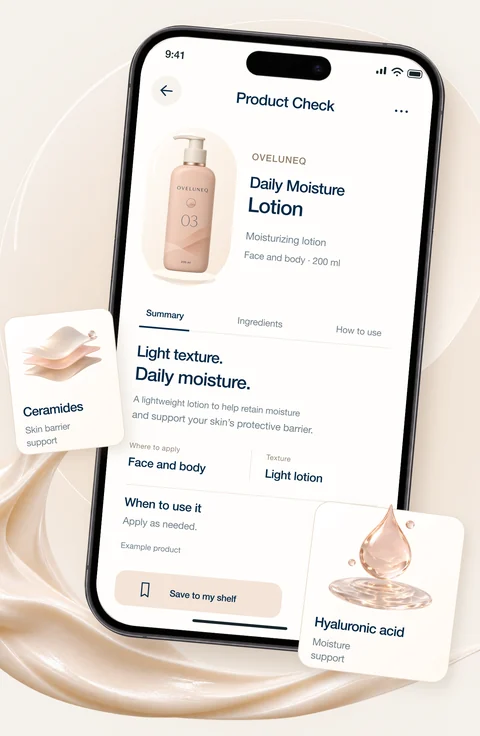
Product Check reads a product photo and shows its ingredients, what they're used for and how to use it, with sources. It's a quick way to spot salicylic acid in a cleanser, toner or serum so you don't end up with several exfoliants in one routine.
Save your products to your Shelf, then let Care Routine place them into morning and evening steps with a reason for each. Ask the AI assistant if you're unsure how to space your acid and retinol nights.
- Open Product Check and photograph the product's packaging
- Check whether salicylic acid is listed and how to use the product
- Save it to your Shelf
- See where it fits in your Care Routine
Questions
Frequently asked questions
What does salicylic acid do for my face?
Salicylic acid is an oil-soluble exfoliant (BHA). It loosens dead skin cells on the surface and works into oily pores, so pores and blackheads can look less clogged and skin looks smoother and less shiny. It works best as part of a gentle routine with moisturizer and daily sunscreen.
Can I use salicylic acid every day?
Some gentle salicylic acid cleansers are made for daily use. With leave-on toners and serums, most people start two or three times a week and only build up if their skin feels comfortable. Always follow the label, and cut back if your skin feels dry or tight.
Should I use salicylic acid in the morning or at night?
Either works. Cleansers fit easily into the morning, while leave-on products are often used at night so they're easier to alternate with other actives. Wear broad-spectrum sunscreen every morning when you use exfoliating acids.
Can I use salicylic acid with niacinamide?
Yes, for most people. Niacinamide is gentle and pairs well with salicylic acid, especially in routines for oily skin. Apply the thinner product first and finish with moisturizer. If your skin feels uncomfortable, use them at different times of day.
Can I use salicylic acid and retinol together?
Not in the same routine. Both work on the skin's surface, and together they often leave skin feeling dry or tight. Use them on different nights, for example salicylic acid one night, retinol another night and a plain moisturizer night in between.
Will salicylic acid help the blackheads on my nose?
It can help blackheads look less noticeable by working into oily pores, but the effect isn't permanent. Blackheads tend to return if you stop, so regular, gentle use alongside a good cleanser and moisturizer works better than occasional harsh scrubbing.